Agnes Cuming Lecture Series 10th and 11th February 2026
Tuesday, 10 February, 2026
Share
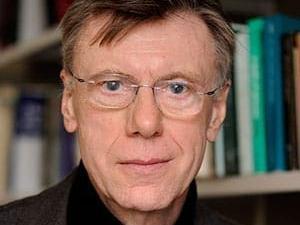
The UCD School of Philosophy is delighted to announce that the Agnes Cuming speaker for 2025/26 will be Michael Williams, Krieger-Eisenhower Professor of Philosophy at Johns Hopkins University. Professor Williams will give two public lectures on the 10th and 11th February 2026.
10th February 2026 6.00 pm Lecture 1: From Sextus to Descartes
Venue: Theatre O, Newman Arts Building UCD
(opens in a new window)Tuesday 10th February 2026 Agnes Cuming Lecture Registration
11th February 2026 6.00 pm Lecture 2: Trouble with Truth
Venue: NTh 1 Lower Ground Floor, Newman Arts Building, UCD Belfield
(opens in a new window)Wednesday 11th February Agnes Cuming Lecture Registration
Abstract
In my first lecture, I shall differ from my teacher Richard Rorty and argue that ancient skepticism, particularly Pyrrhonian skepticism, is more important historically and more interesting philosophically than Rorty allows, though, my main concern will be the latter. In my view. Pyrrhonism has not been properly understood. The Pyrrhonian skeptics practice suspension of judgment in all three of the Hellenistic divisions of philosophy: not only in physics and ethics but also in logic. Since logic, as then understood, includes what we think of as epistemology, Pyrrhonian practice cannot be
grounded in any form of theoretical or doctrinal skepticism. Indeed, one of the first things Sextus tells us is that (in contrast to the Academics) skeptics are not negative dogmatics. Yet at the same time, much of the first book of Outlines of Pyrrhonism is given over to what must strike a modern reader as skeptical arguments: the “Modes” or “Tropes”. Indeed, the Five Modes introduce the skeptical trilemma I mentioned at the outset (“Agrippa’s Trilemma”). So what is going on?
The Pyrrhonists, I shall argue, are not so much epistemological skeptics as skeptics about epistemology: an entirely coherent stance. Indeed, with one important qualification we might even see the Pyrrhonian skeptics as anticipating the pragmatic outlook that Rorty commends. I shall examine this outlook in my second lecture, arguing that it takes an unfortunate skeptical turn. Like other post-modern thinkers, Rorty is suspicious of talk of truth, in so far as truth is understood as correspondence to fact. His approach to this topic has not worn well. Failing to appreciate the virtues of a deflationary approaches to truth, he reads too much into everyday truth-talk. More
importantly, his idea that we must choose between solidarity and objectivity sees too little in what our everyday and scientific concepts of objectivity involve. Rorty’s suspicion of truth-talk has not worn well. Here I shall look back to Bacon, who appreciates the ancient skeptics yet is a true herald of modernity and a philosopher for our troubled times.
Michael Williams specialises in the Epistemology, philosophy of language, history of modern philosophy and history of analytic philosophy. More information can be found on his (opens in a new window)(opens in a new window)website.
UCD School of Philosophy
Room D501 (5th Floor), Newman Building, UCD Belfield, Dublin 4, Ireland T: +353 1 716 8186 | E: philosophy@ucd.ie | Location Map(opens in a new window)UCD Philosophy is ranked among the Top 100 Departments of Philosophy worldwide (QS World University Rankings 2017, 2018, 2021, 2023–2025)