"The twin peaks of Snæfells rose white into the clouds, less than five miles away. […]
We travelled around the enormous base of the volcano. The professor hardly took his
eyes off it; he gesticulated, he seemed to challenge it and say: 'Here’s the giant that
I’ll tame!'"
- Jules Verne, The Journey to the Centre of the Earth.
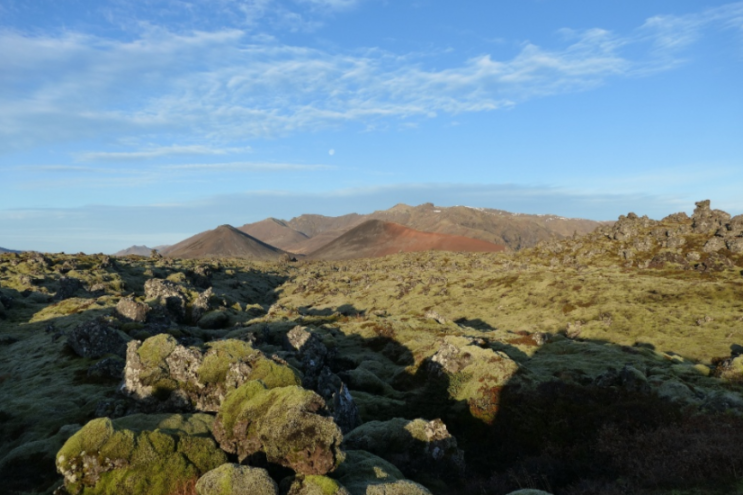 Figure 1. Volcanoes around Berserkjahraun. Photo taken by Samantha.
The extinct volcanos of Snæfellsnes Peninsula and its famous eponymous glacier not only play a major role in Icelandic sagas and literature but have also attracted international attention. While I (sadly!) had to exclude the fictional chimneys and subterranean tunnels leading to the Centre of the Earth as described in Jules Verne’s 1864 science fiction novel from my PhD research, Snæfellsnes Peninsula and the adjoining Breiðafjörður Bay north of it fulfilled all my criteria of an excellent, real-world case study site between nature, culture, and people. Following pilot research in Connemara, Ireland which already generated promising results, I examine the climate vulnerability of rural cultural landscape managed by biocultural heritage tradition and associated with intangible heritage. Ultimately, I assess them with an innovatively designed Climate Vulnerability Assessment (CVA) framework and will facilitate information flow of my research outcomes back into the community through adaptation-focused follow-up workshops.
But for this trip in November 2025, generously supported by MESSAGE, my goal was the initial data collection of interviews and observational research and site visits of the Landscape.
I was interested in speaking with the local experts of the landscape: farmers, bird egg and eider down collectors, fishermen, archaeologists and heritage professionals, geographers and ornithologists, national park rangers, local saga club attendees, I conducted over 20 semi-structured interviews that are now awaiting transcription and analysis.
From these conversations, I learned about the traditions that had initially drawn me to the case study site, especially the collection of eider down. Eider ducks are wild ducks, and build their nests out of the particularly soft down feathers from the mother ducks coat. People have been collecting them for centuries, and have a vested interest in protecting the duck populations from minks.
In general, I was astonished at the local bird knowledge: Other biocultural traditions include the collection of gull and goose eggs, which have served as important food sources in pre-modern Snæfellsnes. They are an acquired taste, so interest is waning, but the skill is still practiced. Puffin hunting on the other hand follows a different fate. Puffins are small, waddling birds with bright red beaks that you can find printed on souvenirs in every tourist shop across the country (of which there aren’t many on Snæfellsnes in the low winter season). Once numerous in the Breiðafjörður Bay, their population declined around 15 years ago, and the community has stopped hunting them since. There is high interest in the population recovering, both for biodiversity reasons and to take up the hunting tradition again.
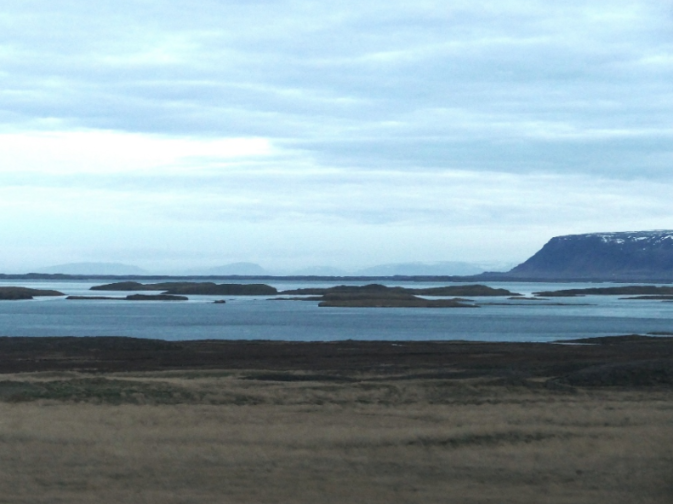
Figure 2. Breiðafjörður Bay.
It is a precarious balance in Breiðafjörður Bay, as it is very shallow and littered with uncountable islets. Due to the shallow waters, it may be a hotspot for climate change impacts including warming ocean temperature and ocean acidification. Only one of the islands is currently inhabited, the biggest and most famous out of them, Flatey. While the other islands are privately owned, sometimes grazed by sheep, and usually used as eider nesting grounds, Flatey is home to a staggering 6 inhabitants, of which I was lucky to meet the majority. They live in and around the tiny village consisting of beautiful 19th-century architectural gems, houses that have remained largely unchanged, where local long-term visitors and tourists celebrate music and life during summers. When I visited, it was quiet. Only a handful of sheep kept me company as I hiked around the island, before my chats with the island farmers.
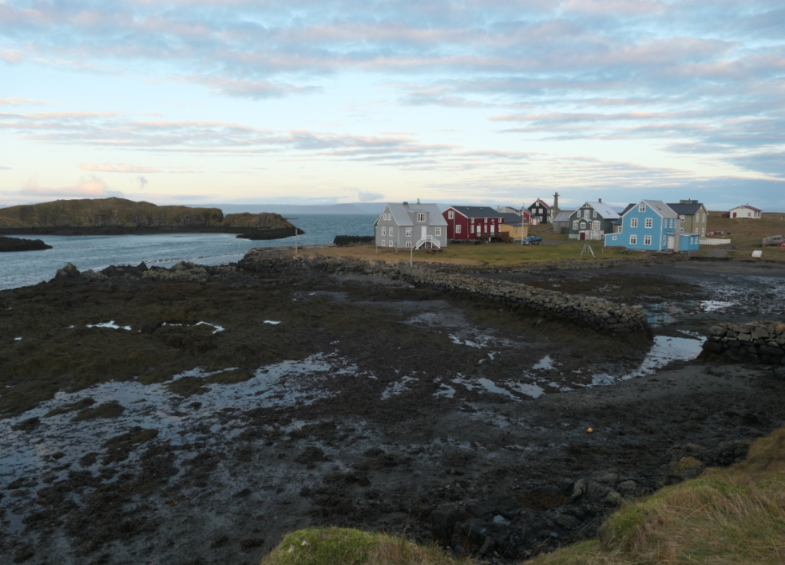 Figure 3. Flatey Island and its small village. Photo taken by Samantha.
It is a key part of my research to observe the landscape in person. Scientific literature, books and papers, climate data, even newspaper articles, and of course the local expert interviews are incredible sources of knowledge, but it is hard to contextualise them if you have never seen the landscape in person. This is why the MESSAGE funding was so valuable to me, it allowed to me to experience the vastness of Breiðafjörður with my own eyes and drive across the alien-looking northcoast of Snæfellsnes Peninsula. It’s where the mountains and extinct volcanoes jut out all the way to the shoreline, lava fields that look like they belong on the moon between them, black rock with green moss and a healthy dusting of icy snow on them. Between them, in smaller bays, a handful of scattered fishing villages.
I followed Road 574 (with the Icelandic road website as my best friend for updates on snowy/icy conditions, but I lucked out and everything remained passable even with some snowfall), ultimately arriving at the National Park on the very tip of the peninsula, home to the aforementioned Snæfells Glacier, and wonderful National Park staff. The landscape changes here, between the mountains and the sea are areas of flat, boggy grasslands, where even in winter straggling sheep run free and graze on whatever sugars are left in the brownish grass. At the same time, it was much flatter and much more mountainous than I expected. Along the coastline, I encountered some eroding pre-industrial fishing stations and a black sand beach. The former is only occasionally visited, though cared for by the local archaeologist, the latter popular with tourists.
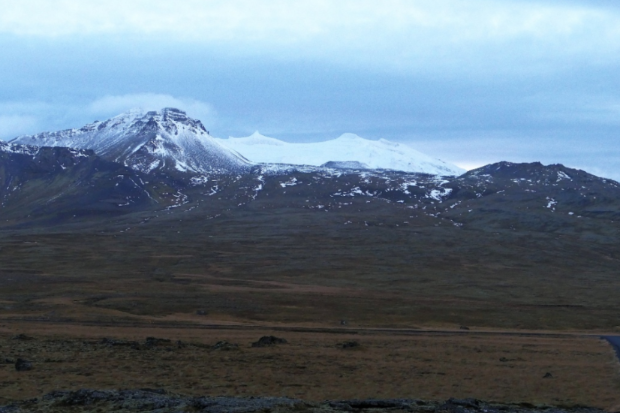
Figure 4. Snæfellsjökull Glacier. Photo taken by Samantha.
I continued along the loop of the peninsula, the south side dominated by grassy fields, Icelandic ponies, frozen lakes, and sheep farms. Though the farms are more scattered, I still had lovely interviews here, before concluding my loop through the mountain pass back to where I started: Stykkishólmur, the main town, where most of my contacts were located, the ferry to Flatey left from, and where I was staying for the 9 days I spent on the peninsula. Driving almost 2000km in total, over 20 interviews, over 70 site visits, it was a very busy but incredibly rewarding 9 days. I learned so much – from the people and from the landscape. I left with an enormous mountain of data and a heavy heart, especially for the Snæfellsnes glacier. Among the sagas and folklore stories I encountered, the places they take place at scattered across the peninsula and in most cases visitable or viewable to this day, one stood out to me. The story of Bárður Snæfellsás, half-giant, half-human, honoured with a 1985 monument close to the glacier, and protector of the peninsula. As Icelandic sagas go, his family’s history contains tragedy and violence: Bárður’s daughters and nephews played by the sea, but one of his daughters got swept away on drifting sea ice. Out of revenge, Bárður killed his two nephews, battled their father, his brother, and then disappeared into the glacier, becoming the spirit of the glacier who may be called upon for help.
But what happens to Bárður as the glacier melts? Will his story supercede the tragedy of nature that we are currently witnessing?
It is greatly affecting the local sense of place and identity, though it is carried with a certain stoicism. He lives in the mountain, many said, and the mountain will still be there, even if the ice melts – even though Snæfells means ‘snow mountain’.
I take these concerns to heart and will anchor them in my vulnerability assessment. This is why I am doing my research: we know the glacier is melting, but we don’t know how this will affect Bárður and what he represents, especially the local love and care for the landscape that I was so lucky to experience first-hand.
Written by and photos taken by Samantha Tobiáš.