Explore UCD

UCD Home >

Undergraduate Programmes

Undergraduate Programmes

The UCD School of Biosystems and Food Engineering combines engineering innovation with environmental leadership to address some of the most pressing challenges we face today —sustainable food production, renewable resources, climate resilience, and technological transformation in agriculture.

Our undergraduate programmes provide students with strong scientific and engineering foundations while connecting learning directly to real-world applications that improve lives and protect natural systems.

Students can choose between two exciting degree programmes:

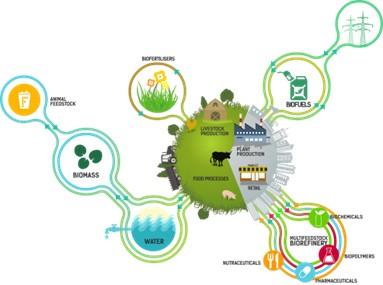
The four-year level 8 BE Sustainable Systems Engineering programme equips graduates to address global challenges across food and biosystems, energy and the environment. Students explore cutting-edge technologies in renewable energy, water, waste, and environmental management, alongside sustainable food production and processing for the circular bioeconomy.

You will develop systems thinking and apply sustainability assessment tools and ethical engineering practices. With hands-on experience through design projects and professional work experience, you will be prepared for careers in the circular bioeconomy, sustainable energy, climate adaptation, and food innovation, transitioning to a low-carbon and sustainable future.


What will I study?

First Year

Engineering students follow a common first-year curriculum. Modules include: Calculus • Chemistry • Creativity in Design • Electrical/ Electronic Engineering • Energy Engineering • Engineering • Computing • Linear Algebra Mathematics • Mechanics • Physics

Second to Fifth Year

Modules may include: Sustainable Systems Design • Food Physics • Waste to Energy Processes & Technologies • Bioeconomy • Life Cycle Assessment • Thermodynamics & Kinetics • Hydraulics, Calculus • Statistics • Sustainable Engineering Research Trends • Applied Programming • Modelling and Simulation • Heat Transfer & Fluid Mechanics • Biorefinery processing • Hyperspectral imaging • Food Process Engineering • Water and Wastewater Engineering • Professional Engineering studies (management and finance)

Each week, students engage in lectures, tutorials, hands-on design challenges, laboratory work, group projects, and independent study. Assessment combines end-of-trimester exams with continuous evaluation. In the final year, students complete a major research and design project in their chosen area.

Progression Requirements

At the end of year 3, students can choose either to pursue a 4-year BE or a 5-year integrated ME degree pathway, subject to meeting grade requirements.

Professional Work Experience

Professional Work Experience (PWE) is incorporated during the summer between stages 3 and 4 and can be based in Ireland or internationally with industry, research institutes, or government agencies. Three-month potential industry internship opportunities include the following employers: Glanbia, Sanofi, Royal Oak Distillery, Diageo/ Guinness, Abbott, PM Group, Rowan Engineering Consultants, Green Generation, Maria Lucia Bakes, and Takeda Ireland.

You can find more details and how to apply here.

The four-year level 8 BAgrSc Agricultural Systems Technology is aimed at students who wish to learn how to build, develop, and manage technology for the agriculture sector. Students will gain a deep understanding of how to use technology in order to improve and enhance sustainability, efficiency and reliability in farming and food production. You will take classes in engineering, science, mathematics and data science. Upon completing the course, you will be uniquely equipped to build, develop and manage technologies such as computer systems, networks, data management and sensors, machinery systems and precision agriculture.

What will I study?

Students will study modules in basic science, agricultural sciences, engineering technologies and data science. Modules include:

Year 1

Chemistry for Engineers,  Intro. to Eng. Computing, Creativity in Design, Electronic and Electrical Engineering I, Introduction to Calculus for Engineers, Physics for Engineers I, Linear Algebra for Engineers, Mechanics for Engineers, Energy Engineering, Physics for Engineers II

Year 2

Food Physics, Applied Programming for Ag Systems, Thermodynamics & Kinetics, Hydraulics I, Multivariable Calculus for Eng, Construction Practice, Intro to Carbon and Energy Footprinting, Statistics & Probability, Sustainability Eng Res Trends, Sustainable Systems Design

Year 3

Water and Wastewater Engineering, The Bioeconomy; A strategy for sustainable fuel, material and chemical production, Life Cycle Assessment, MATLAB and R for beginners, Bioprocess Engineering Principles, Renewable Energy Systems Analysis, Modelling and Simulation, Heat Transfer & Fluid Mech, Practical Applications ArcGIS, Sustainability Design Challenge, BE Professional Work Experience

Year 4

Food Chain Integrity, Unit Ops for Bioprocess Eng, Hyperspectral imaging, Waste to Energy Processes & Technologies, Food Process Engineering, Professional Engineering (Mgt), Professional Engineering (Finance), Capstone Research Project

Please note thatthe elective modules are not included in this list, as students will have a choice to pick elective modules of their choice from a suite of relevant modules appropriate for the programme.

Students will spend an average of 40 hours a week attending lectures, tutorials and laboratory-based practicals, and undertaking independent study. A combination of continuous assessment and end-of-trimester written examinations is used. Certain modules also require project work.

Professional Work Experience (PWE) 

A 16-week period of structured PWE takes place in third year. PWE can be taken in Ireland or abroad.


You can find more details and information on how to apply here.

Contact UCD School of Biosystems and Food Engineering

Room 303. Agriculture & Food Science Centre, University College Dublin, Belfield, Dublin 4, Ireland.
T: +353 1 716 7484 | E: sbfe@ucd.ie | Location Map(opens in a new window)

General queries related to registration, programmes, exams, and extenuating circumstances can be submitted via the College of Engineering & Architecture connector: https://www.ucd.ie/eacollege/connector/